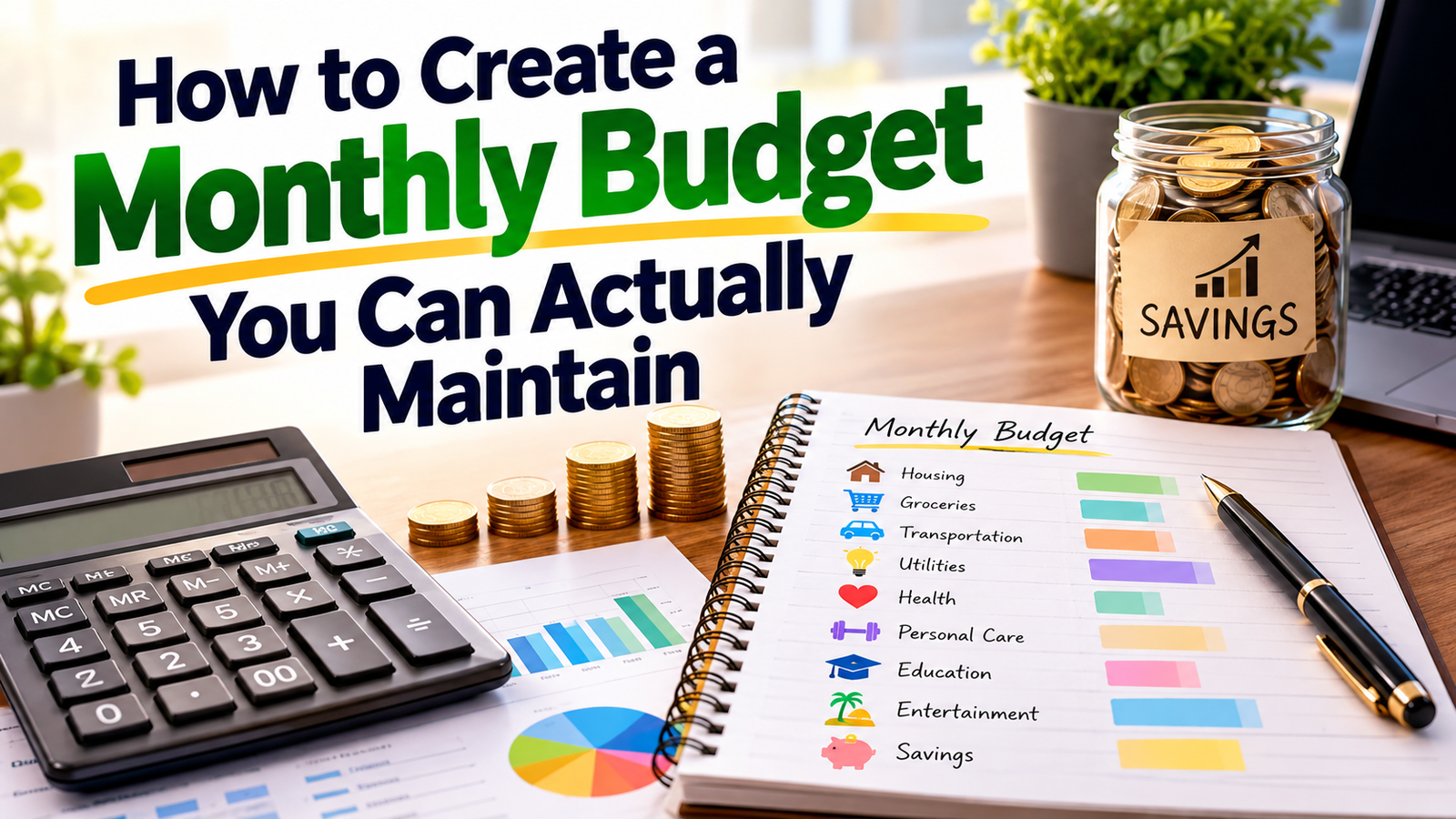

Smart money decisions are not reserved for financial experts. They are built through ordinary habits that help you understand your income, control spending, prepare for uncertainty, and make informed choices. A practical approach does not promise instant wealth or remove every challenge. Instead, it gives you a clearer process for handling daily expenses and working toward meaningful goals.
This article is for general educational purposes only. It is not personal financial, tax, legal, or investment advice. Financial products, regulations, fees, and risks vary by location and individual circumstances. Review reliable official information and consider qualified professional guidance before making decisions that may significantly affect your finances.
Know Where Your Money Goes
The first smart decision is to replace guesswork with information. Record your income, regular bills, debt payments, savings, and flexible spending. Include costs that happen less frequently, such as annual renewals, repairs, gifts, travel, or school expenses. Bank statements and receipts can help you create a more accurate picture.
Review several months when possible because one month may not represent your usual pattern. Sort expenses into essential, flexible, and future categories. Essential costs support housing, food, transportation, healthcare, utilities, insurance, and required obligations. Flexible expenses may include entertainment, dining, hobbies, and optional services. Future categories include savings, planned purchases, education, and long-term goals.
This exercise is not about judging every purchase. It is about understanding what your money is doing so that your choices match your priorities.
Build a Flexible Spending Plan
A spending plan should guide your decisions without making ordinary life impossible. Start with actual spending rather than an idealized number. Choose one or two realistic improvements, such as cancelling an unused subscription, comparing service prices, preparing more meals at home, or setting a weekly limit for discretionary purchases.
Include a buffer for changing costs. Groceries, fuel, medical needs, and family responsibilities may vary. If income is irregular, use a cautious estimate for essential commitments and avoid building recurring expenses around a temporary high-income month. When income is better than expected, consider directing part of the difference toward savings, upcoming bills, or debt reduction.
Review the plan at the end of each month. If your results differ from the plan, identify why and make an adjustment. A budget is a working document, not a permanent contract.
Prepare for Emergencies
An emergency reserve can help with necessary costs that are difficult to predict, such as an urgent repair, medical expense, or temporary loss of income. Begin with a modest target that could cover one realistic problem. Then gradually work toward an amount based on essential expenses, income stability, household responsibilities, and access to other resources.
Keep emergency money safe and reasonably accessible. Its purpose is stability, so money that may be needed soon should not depend on an asset that could lose substantial value. If you use the fund for a genuine need, record the expense and create a manageable plan to rebuild the balance.
Plan for Irregular Bills
Many financial surprises are predictable even when their exact dates are uncertain. Make a yearly list of insurance renewals, vehicle maintenance, home repairs, professional fees, holidays, gifts, and memberships. Estimate each amount and divide it across the months before the bill is due.
You can track these goals in a spreadsheet, separate account categories, envelopes, or a budgeting application. The method matters less than clear labels and regular contributions. After paying a bill, compare the actual amount with your estimate and update future plans.
Manage Debt Deliberately
List each debt with its balance, interest rate, minimum payment, due date, fees, and repayment terms. Continue required payments on time and decide how to use extra money. Paying the highest-interest balance first may reduce interest costs, while paying the smallest balance first may create visible progress. Select a strategy that you can follow consistently.
Before borrowing, calculate the complete cost. Review interest, origination charges, insurance, penalties, and the length of the agreement rather than focusing only on the monthly payment. A low monthly payment can still be expensive when it continues for many years.
If payments become difficult, contact the lender as early as possible and ask about available options. Be cautious with companies that guarantee debt elimination, promise immediate results, or require large fees before clearly explaining their services. Verify claims independently and protect your personal information.
Use Credit Carefully
Credit can be useful, but available credit is not the same as available income. Review statements, understand billing dates, and monitor interest and fees. Before a purchase, ask whether the payment fits your budget after other obligations are considered and whether the item would remain affordable during a lower-income month.
Keep records of payments and communications. Check account information for errors and use the appropriate official process to report inaccurate records. Because consumer-credit rules differ by location, consult local official resources for specific rights and procedures.
Protect Your Financial Information
Security is an important part of money management. Use unique passwords for banking, email, and payment accounts. Enable multi-factor authentication, activate transaction alerts, update devices, and review statements regularly. Keep important documents secure and share sensitive information only when necessary.
Be careful with messages that create urgency, request one-time codes, ask for gift cards or unusual transfers, or promise guaranteed profits. A familiar logo or caller identification does not prove that a request is genuine. Contact the organization through a verified official channel and confirm unexpected requests independently.
Learn Before Investing
Saving and investing serve different purposes. Savings generally prioritize access and stability for near-term needs. Investments can fluctuate and are usually considered for longer time horizons. Before investing, understand the product, fees, risks, taxes, withdrawal rules, time horizon, and possible losses.
Diversification can reduce the effect of one investment performing poorly, but it cannot eliminate risk. Avoid decisions based only on social media, urgency, celebrity endorsements, or claims of guaranteed returns. Past performance does not guarantee future results. Use reliable information and verify that providers meet applicable requirements.
Improve Income Responsibly
Financial progress can come from increasing income as well as reducing expenses. Consider developing a useful skill, applying for a new role, requesting a compensation review, seeking legitimate freelance work, or selling items you no longer need. Evaluate the full opportunity, including time, transportation, equipment, taxes, platform fees, and reliability.
Be skeptical of offers that require upfront payment, request gift cards, or promise unusually high earnings for little effort. Research organizations independently and do not send identity documents until you understand who is requesting them and why. A responsible opportunity should explain the work, payment terms, and risks clearly.
Set Clear Financial Goals
Goals become easier to manage when they include a purpose, amount, and target date. Estimate the cost, calculate the available time, and determine a regular contribution. If the required amount is too high, adjust the timeline, reduce the target, increase income, or combine strategies.
Prioritize according to urgency and consequences. Essential bills, basic protection, emergency savings, and high-cost debt may need attention before optional purchases. Still, allow room for reasonable enjoyment. A plan that ignores every personal priority may be difficult to maintain.
Review and Adapt
Choose a monthly time to review income, spending, upcoming bills, savings, debts, and unusual transactions. Once or twice a year, review insurance, subscriptions, beneficiaries, important documents, and long-term goals. A new job, move, marriage, separation, child, health change, or large purchase may require a deeper review.
Progress will not always be smooth. An unexpected repair can delay a goal, and a change in income can require a different plan. Treat these events as information. Protect essential commitments, adjust the budget, and continue with the next practical step instead of abandoning your system.
Conclusion
Smart money decisions are based on awareness, flexibility, preparation, and consistent review. Understanding cash flow, planning for emergencies, managing debt, protecting accounts, learning before investing, and setting measurable goals can improve financial clarity. No single habit guarantees a specific result, but a simple system can help you respond thoughtfully when circumstances change. Start with one realistic action and strengthen your habits over time.