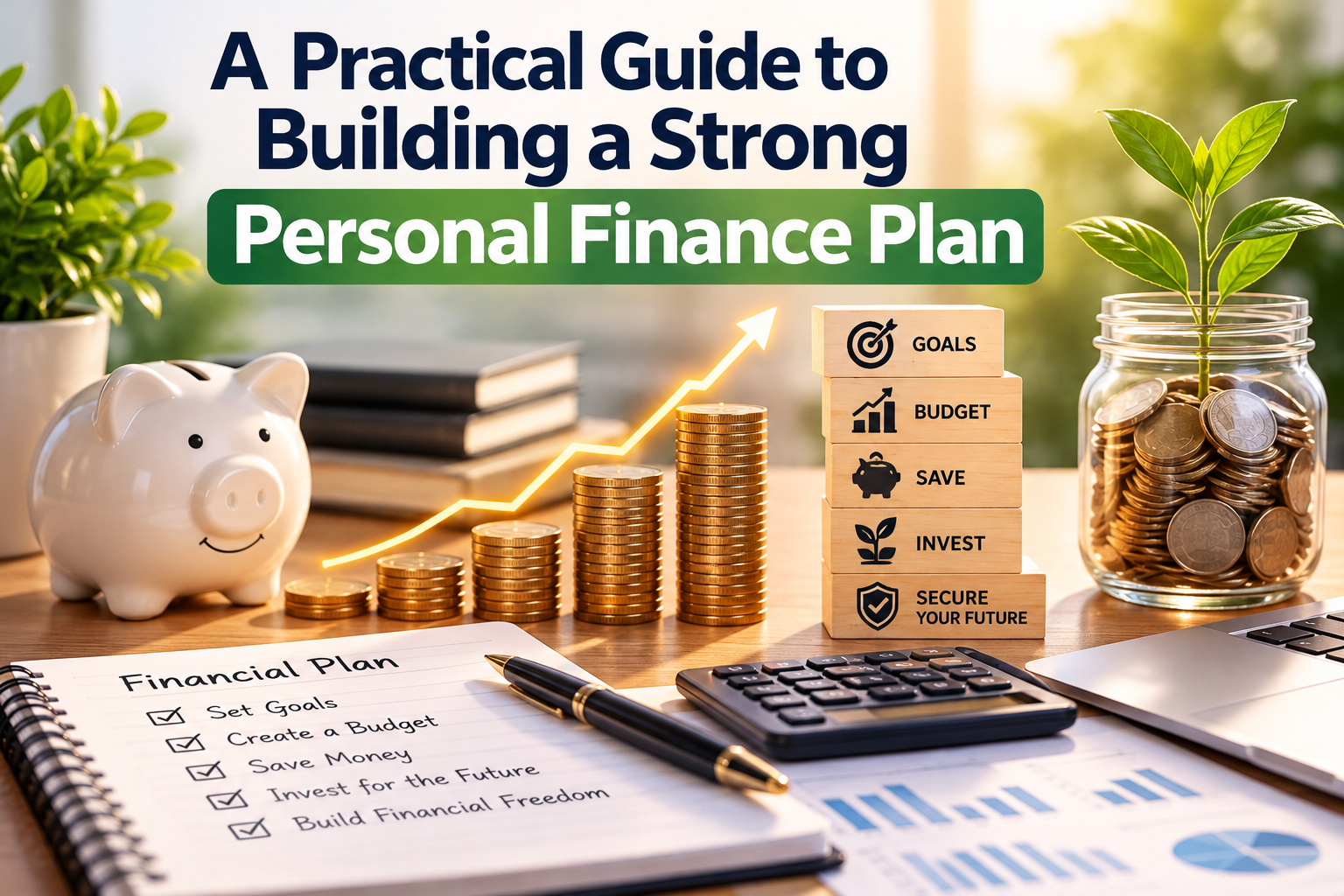
Building financial stability is not about earning a perfect salary, following a complicated investment strategy, or never making a mistake. It is a gradual process of creating enough organization and flexibility to handle ordinary expenses, unexpected events, and long-term goals with less stress. Whether your income is steady, variable, modest, or growing, the same basic principles can help you make thoughtful decisions and improve your financial position over time.
This guide focuses on practical habits rather than promises of quick wealth. Personal finance involves individual circumstances, and information in this article is for general educational purposes only. Before making important financial, tax, or investment decisions, consider your goals, local rules, and advice from a qualified professional.
1. Start With a Clear Picture of Your Money
Financial progress begins with accurate information. For one month, write down every source of income and every expense. Include rent or mortgage payments, utilities, transportation, groceries, insurance, subscriptions, debt payments, fees, and occasional costs such as gifts or repairs. Reviewing several months is even better because some expenses do not appear every week.
Separate spending into three groups: essential costs, flexible costs, and future priorities. Essential costs are expenses needed for housing, food, healthcare, transportation, and basic obligations. Flexible costs may include entertainment, dining out, shopping, or optional services. Future priorities include emergency savings, debt reduction, education, retirement, and other goals. This simple structure shows where your money is going without labeling every purchase as good or bad.
2. Build a Realistic Spending Plan
A budget works best when it reflects your actual life. Instead of choosing an unrealistic percentage for every category, begin with your current numbers and make one improvement at a time. You might set a weekly limit for discretionary spending, review recurring subscriptions, or prepare meals at home more often. Small changes are easier to maintain than extreme restrictions.
Give every major income payment a purpose before it arrives. A simple plan might assign money to housing, bills, food, transportation, savings, debt payments, and personal spending. If your income changes from month to month, create a basic plan using your lower expected income. When you earn more, direct part of the extra money toward savings, upcoming expenses, or debt rather than immediately increasing regular commitments.
3. Create an Emergency Fund
An emergency fund is cash set aside for unexpected but necessary expenses. It can help cover a medical bill, urgent repair, temporary income interruption, or essential travel without relying entirely on high-cost borrowing. Start with a small target that feels achievable, such as enough to handle one common emergency. After reaching that amount, gradually work toward several months of essential expenses.
Keep emergency money accessible and separate from everyday spending. The best location depends on your country, financial institution, and personal needs, but the key qualities are safety, reasonable access, and clear account terms. An emergency fund is not designed to generate the highest possible return. Its main job is stability, so avoid placing money needed for near-term emergencies in assets whose value can fluctuate significantly.
4. Manage Debt With a Written Strategy
Debt becomes easier to manage when you know the balance, interest rate, minimum payment, due date, and any fees for each account. Make all required minimum payments on time, then choose a repayment method for additional money. The highest-interest approach can reduce interest costs over time, while the smallest-balance approach can provide quick progress and motivation. Either method can work if you follow it consistently.
Be cautious about taking on new debt to fund optional purchases. Before borrowing, calculate the total repayment amount, not just the monthly payment. A low monthly payment may last for a long period or include fees. If payments are becoming difficult, contact the lender early and ask about available options. Avoid companies that guarantee instant debt elimination or demand large fees before clearly explaining their services.
5. Plan for Irregular Expenses
Many financial surprises are predictable even if their timing is uncertain. Annual insurance bills, school costs, maintenance, holidays, professional fees, and vehicle repairs can be planned for with separate savings categories. Estimate the yearly cost, divide it by the number of months remaining, and set aside that amount regularly. This turns a large future bill into a series of smaller contributions.
You can use a savings account, a budgeting app, or a simple spreadsheet to track these funds. The method matters less than keeping the money visible and using it only for its intended purpose. When an irregular expense is finally paid, update the estimate for the next cycle. Planning becomes more accurate as you learn from real spending.
6. Protect Your Financial Base
Financial stability also involves reducing the impact of risks. Review whether your health, property, vehicle, disability, or life insurance fits your situation and local requirements. Read the policy terms, exclusions, deductibles, limits, and renewal conditions instead of relying only on an advertisement or summary. The right coverage varies by household, so compare the protection provided with the cost and your ability to absorb a loss.
Protect your accounts as well. Use strong, unique passwords, enable multi-factor authentication where available, and review account alerts. Be skeptical of unsolicited messages asking for passwords, one-time codes, payment details, or urgent transfers. Legitimate financial institutions generally provide official ways to verify a request. Never share security codes with someone who contacts you unexpectedly.
7. Set Short- and Long-Term Goals
Goals give your budget direction. A short-term goal might be paying an upcoming bill or replacing essential equipment. A medium-term goal could be building a larger emergency reserve, reducing a loan, or saving for education. A long-term goal might involve retirement or a future home. Write down the amount, target date, and monthly contribution for each goal.
Prioritize goals based on urgency and consequences. Essential protection and high-cost debt often deserve attention before optional purchases. At the same time, allow room for meaningful activities that support your wellbeing. A plan that ignores every personal priority can be difficult to maintain. Balance helps turn financial habits into a sustainable routine.
8. Learn the Basics Before Investing
Investing may help support long-term goals, but it involves risk and should not replace emergency savings or money needed soon. Before investing, understand your time horizon, ability to tolerate losses, fees, taxes, and the purpose of the account. Diversification means spreading money among different investments rather than relying heavily on one company, sector, or asset.
Do not invest based solely on social media claims, celebrity endorsements, pressure to act immediately, or promises of guaranteed returns. Every investment has trade-offs, and past performance does not guarantee future results. Use information from reliable sources, verify that a provider is properly authorized where applicable, and make sure you understand how money can be deposited, withdrawn, and valued.
9. Increase Income Carefully
Reducing expenses is only one part of financial progress. You can also explore ways to increase income, such as requesting a review of your compensation, developing a useful skill, taking legitimate freelance work, or selling items you no longer need. Evaluate opportunities by considering time, transportation, equipment, taxes, platform fees, and income reliability.
Be especially careful with work-from-home offers that require upfront payments, ask you to purchase gift cards, or promise unusually high earnings for little effort. Research the company independently and never send money or sensitive information simply because an opportunity sounds urgent. A genuine income strategy should be understandable, legal, and realistic about effort and results.
10. Review Your Plan Regularly
Your financial plan should change as your life changes. Review it monthly to compare planned and actual spending, check upcoming bills, and move money toward current priorities. Review it more deeply after a new job, move, marriage, separation, child, major purchase, or change in health. Update account beneficiaries and important documents when appropriate.
Progress is not measured by avoiding every mistake. It is measured by noticing problems earlier, making informed adjustments, and continuing to use a process that fits your circumstances. Automating a regular transfer, negotiating one recurring bill, or paying one extra debt installment can be meaningful when repeated over time.
Conclusion
Financial stability grows from clarity, preparation, protection, and consistent decisions. Track your money, create a realistic spending plan, build accessible savings, manage debt deliberately, prepare for irregular costs, protect your accounts, and learn before taking investment risks. You do not need to change everything at once. Choose one manageable action today, review the result, and build the next habit from there. With patience and accurate information, financial confidence can become a practical skill rather than a distant ideal.