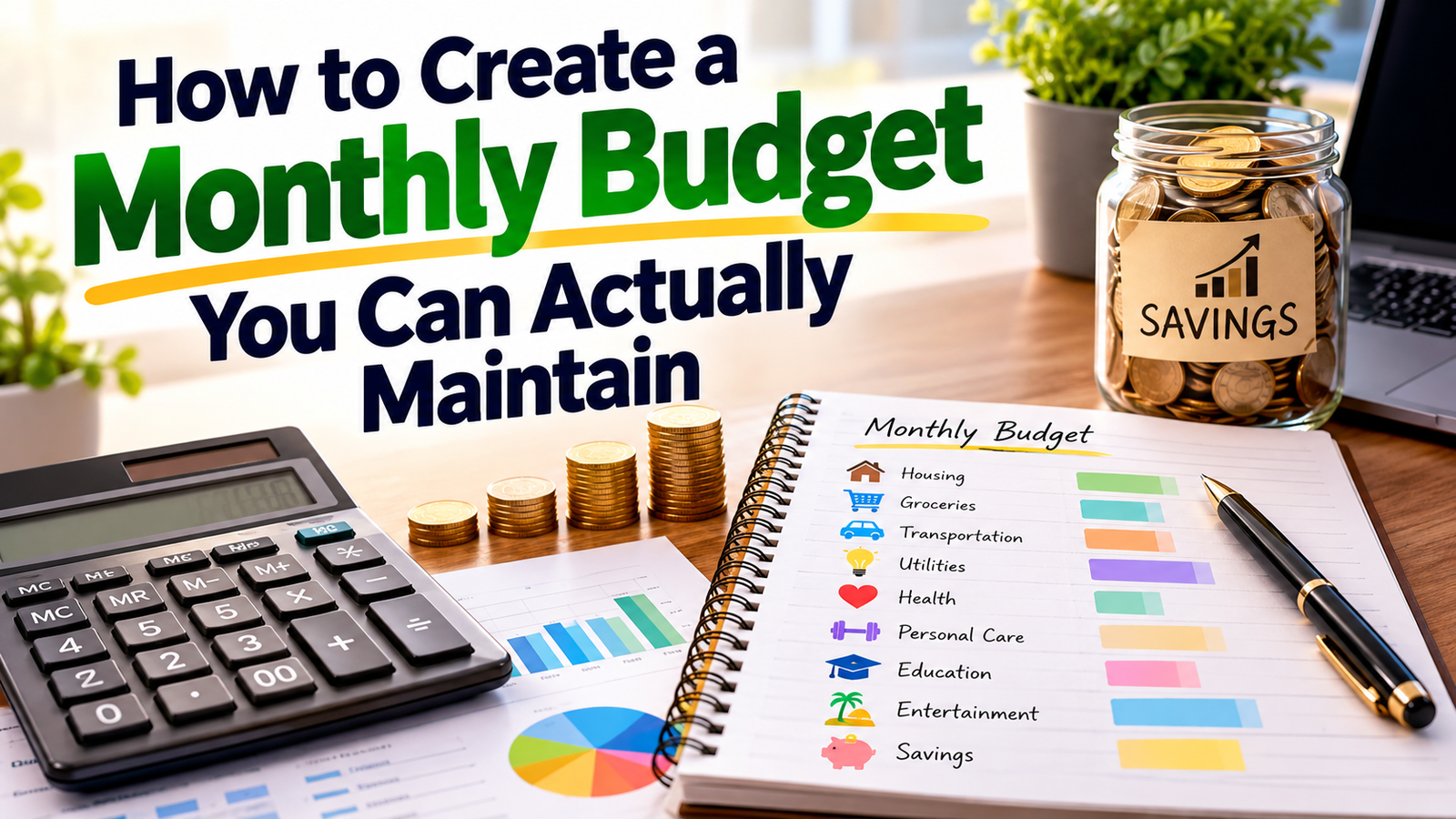

Financial goals are easier to achieve when they are clear, realistic, and connected to everyday decisions. A goal gives your money a purpose, while a practical plan explains what you will do and when you will review your progress. You do not need a high income or a complicated system to begin. You need honest information, a manageable first step, and the willingness to adjust as your circumstances change.
Understand Why Financial Goals Matter
Without defined goals, money often disappears into immediate purchases and recurring expenses. That does not mean every purchase is wrong, but it can make long-term priorities difficult to fund. A goal helps you decide which expenses support your life now and which choices also protect your future.
Financial goals can include building emergency savings, paying down debt, preparing for education, saving for a home, replacing a vehicle, planning a trip, or investing for retirement. The right goals depend on your responsibilities, values, income, and time horizon. Avoid copying someone elses priorities without considering your own situation.
Separate Short-Term and Long-Term Goals
Short-term goals may take a few weeks or months, while medium-term goals can take several years. Long-term goals, such as retirement, may extend for decades. Separating them makes it easier to choose suitable accounts and contribution amounts.
Money needed soon should generally be kept accessible and protected from unnecessary market risk. Long-term money may have more time to handle fluctuations, although every investment involves risk. Before choosing a product, understand its fees, access rules, tax treatment, and potential for loss.
Make Each Goal Specific
A vague goal such as “save more money” is difficult to measure. Rewrite it with an amount, purpose, and target date. For example, “save $1,200 for a professional course by December” provides a clearer direction. If the target is twelve months away, a simple starting calculation is $100 per month, before considering interest or changes in income.
Specific goals make trade-offs visible. If the required monthly amount is too high, you can extend the deadline, lower the target, increase income, reduce another expense, or combine several changes. The purpose is not to create pressure but to turn an intention into information.
Check Your Current Financial Position
Before creating a plan, list your monthly income, essential expenses, flexible spending, savings, and debts. Use recent bank statements, bills, and account records instead of memory. Include irregular costs such as insurance, maintenance, annual fees, gifts, and medical expenses.
Calculate your available amount only after covering necessary obligations. If the result is small or negative, focus first on stabilizing cash flow. A plan that ignores rent, food, transportation, utilities, or minimum debt payments will not be sustainable.
Build a Basic Safety Buffer
An emergency fund can help you handle unexpected costs without immediately relying on high-cost credit. The appropriate amount depends on your income, household, health, employment, and obligations. Start with a small milestone if a large reserve feels impossible, then increase it gradually.
Keep emergency savings accessible and separate from money intended for planned spending. The fund is for genuine unexpected needs, not routine purchases. If you use it, make replenishing it a priority after the immediate problem is resolved.
Choose a Saving Method
Automatic transfers can make progress consistent because they move money before it is spent. Schedule transfers after income arrives and confirm that enough remains for bills and daily needs. If your income varies, use a smaller automatic amount and add extra contributions during stronger months.
You can also use separate categories or accounts for different goals. Clear labels make it easier to see what money is available and reduce the temptation to use funds reserved for another purpose. Review account fees and access conditions before opening or changing an account.
Manage Debt as Part of the Plan
Debt repayment should be included in your financial goals. List each balance, interest rate, minimum payment, and due date. Pay at least the required amount on time, then consider whether extra money should target the highest-interest balance or the smallest balance for motivational reasons.
Do not commit every available dollar to accelerated repayment if it leaves no room for essential costs or modest emergency savings. A small cash buffer may help prevent a new debt when an unexpected bill arrives. If repayment becomes difficult, communicate with the lender before missing payments and review the terms carefully.
Protect Your Plan From Lifestyle Inflation
When income increases, it is natural to improve your lifestyle. However, automatically increasing every expense can prevent your financial position from improving. Decide in advance how to divide additional income among current needs, enjoyment, savings, and debt reduction.
This does not require eliminating enjoyable spending. A balanced plan can include a reasonable amount for hobbies, travel, eating out, or personal purchases. The key is to make those choices intentionally instead of allowing them to consume money meant for important goals.
Use a Monthly Progress Review
Set aside time each month to compare your plan with actual results. Check contributions, account balances, bills, spending categories, and upcoming deadlines. If a category was consistently too low, update the estimate rather than treating the difference as a personal failure.
Ask whether your goal is still relevant, whether the deadline remains realistic, and what adjustment would provide the most benefit. A review can be brief, but it should result in a specific next action, such as changing an automatic transfer or canceling an unused service.
Handle Setbacks Constructively
Financial progress is rarely a straight line. A repair, job change, family responsibility, or health expense can interrupt saving. When this happens, protect essential obligations, pause lower-priority contributions if necessary, and avoid abandoning the entire plan.
Separate a temporary setback from a permanent change. Once the situation improves, restart with an amount that fits your new reality. Consistency over many months is usually more valuable than an ambitious plan that cannot survive a difficult week.
Learn Before Making Major Decisions
Important financial decisions deserve careful research. Compare fees, interest rates, withdrawal rules, penalties, risks, and tax considerations. Read official documents and ask qualified professionals for advice when the decision is complex or significant.
Be cautious about offers that promise guaranteed high returns, create urgency, or require payment before explaining the product clearly. Never share account credentials or sensitive information through an unexpected message. Good financial planning is based on understandable terms, realistic expectations, and informed choices.
Create a Simple Priority Order
If you have several goals, rank them instead of trying to fund everything equally. A common starting point is to cover essential expenses, maintain minimum debt payments, build an initial emergency buffer, address expensive debt, and then increase longer-term savings. Your personal circumstances may require a different order.
Ranking goals does not mean abandoning the others. It means deciding where the next available dollar will have the greatest value. Revisit the order when income, family responsibilities, interest rates, or deadlines change.
Conclusion
Financial goals become more achievable when they are specific, measurable, and connected to a realistic monthly plan. Start by understanding your income and expenses, separate goals by time horizon, build a safety buffer, manage debt carefully, and review progress regularly. Use reliable information and avoid promises that sound too good to be true.
You do not need to solve every financial challenge at once. Choose one meaningful goal, define the next action, and make the contribution manageable enough to repeat. Over time, clear priorities and consistent reviews can help you make better decisions and build greater financial stability without relying on unrealistic expectations.