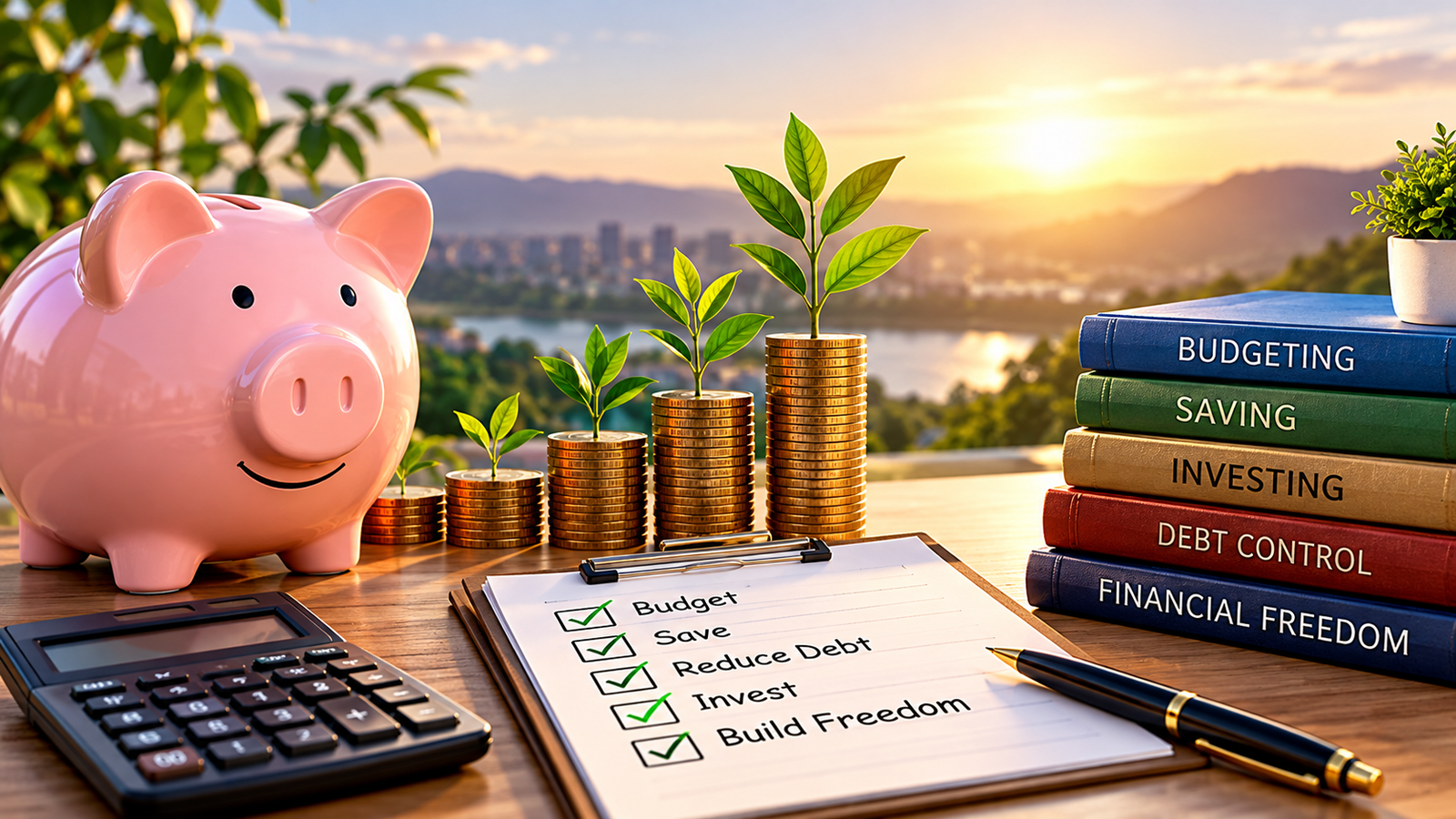

Smart money habits can make everyday financial decisions clearer and more manageable. Financial well-being does not require a perfect income, a complicated system, or constant sacrifice. It grows from consistent choices that help you understand your cash flow, prepare for predictable needs, manage uncertainty, and keep long-term goals visible.
This article is general educational information. It is not personal financial, tax, legal, credit, insurance, or investment advice. Rules, products, fees, and risks vary by location and personal circumstances. Review reliable official information and consider qualified professional guidance before making important decisions.
Know Where Your Money Goes
The first useful habit is observing your financial life accurately. Record income, essential bills, flexible spending, debts, savings, subscriptions, and annual expenses. Use recent statements and receipts instead of memory. Include expenses that occur only occasionally, such as maintenance, renewals, gifts, travel, education, and medical needs.
Organize spending into broad categories. Housing, utilities, food, transportation, healthcare, insurance, and required payments may be essential. Dining out, entertainment, hobbies, and some subscriptions may be flexible. The purpose is not to label choices as good or bad; it is to understand which costs can change when circumstances change.
Create a Realistic Spending Plan
A spending plan should reflect your actual life. List expected income, then assign money to essential obligations, savings, debt payments, irregular expenses, and flexible spending. Leave room for variation because groceries, energy, transportation, and household needs may not cost the same every month.
At the end of each month, compare your plan with actual results. If a category is consistently too low, update the estimate. If a subscription is unused, consider removing it. A spending plan is a tool for learning and adjusting, not a test of personal worth.
Build a Bill Calendar
Write down paydays, bill due dates, loan payments, insurance premiums, subscriptions, and annual renewals in one calendar. A household can have enough income for the month but still experience pressure if several payments arrive at the same time.
Review automatic payments regularly. Confirm the amount, date, and account details, and check statements for unexpected charges. Automation can reduce missed payments, but it should not replace reviewing account activity.
Prepare for Irregular Expenses
Many financial surprises are predictable expenses that were not included in the plan. Create a yearly list of costs that happen quarterly, twice a year, or annually. Estimate each amount and divide it across the months before the due date. Set aside an affordable contribution and update the estimate when better information becomes available.
This approach can make large obligations easier to manage. If the full amount cannot be saved immediately, start with a smaller contribution and increase it when possible. Planning ahead may reduce the need to rely on expensive credit for a known expense.
Develop an Emergency Reserve
Emergency savings are intended for necessary and unexpected costs, such as an urgent repair, medical bill, or temporary loss of income. Begin with a small target that could help with one realistic problem. As your circumstances allow, work toward a larger reserve based on essential expenses, income stability, household responsibilities, and available support.
Keep emergency funds in a safe and accessible place with clear terms. Money that may be needed soon should not depend entirely on an asset that could lose value at an inconvenient time. If you use the reserve, record the reason and include rebuilding it in a later plan.
Manage Debt With Complete Information
For each debt, record the balance, interest rate, minimum payment, due date, fees, and repayment period. A low monthly payment may still involve a high total cost if repayment lasts longer. Understanding the complete terms helps you compare options more carefully.
Some people prioritize the balance with the highest interest rate, while others begin with the smallest balance to create visible progress. Each method has practical considerations. Choose an approach that fits your circumstances and that you can maintain consistently.
If repayment becomes difficult, contact the lender early and ask about official options. Be cautious with services that promise guaranteed debt cancellation, instant results, or unusually easy solutions. Research independently before paying fees or sharing sensitive information.
Use Credit Deliberately
Available credit is not the same as available income. Before borrowing, consider whether the payment remains affordable after essential costs and whether it would still fit during a lower-income period. Review interest, fees, penalties, insurance, and the complete repayment amount.
Check statements for errors or unauthorized transactions and use the appropriate official process to report concerns. Keep records of payments and communications. Credit rules differ by location, so consult reliable local resources about rights and responsibilities.
Set Specific Goals
A financial goal becomes easier to manage when it has a purpose, amount, and target date. Examples include building an emergency reserve, reducing debt, saving for education, preparing for a planned purchase, or replacing important equipment.
Divide each target into contributions that fit your cash-flow plan. Prioritize goals according to urgency and consequences. Essential obligations, basic protection, emergency savings, and high-cost debt may deserve attention before optional goals. Review progress regularly and adjust the amount or timeline when circumstances change.
Protect Your Financial Information
Account security is an important money habit. Use unique passwords for important accounts and enable multi-factor authentication when available. Keep devices and applications updated, activate transaction alerts, and review account access periodically.
Be cautious with messages that create urgency, request one-time codes, ask for gift cards, or demand unusual transfers. Names, logos, and caller identification can be copied. Contact organizations through verified official channels instead of using information from unexpected messages.
Review Insurance and Important Documents
Insurance can help manage certain risks, but coverage, exclusions, deductibles, limits, and costs differ. Review policies when your household, property, transportation, health, or responsibilities change. Do not assume that a policy covers every possible event.
Keep important documents organized and secure. These may include contracts, policies, identification records, tax documents, account information, and instructions for accessing essential services. Limit access to sensitive information and replace outdated records.
Learn Before Investing
Before considering an investment, understand how it works, what it costs, how quickly money can be accessed, and what losses are possible. Money needed for emergencies or near-term obligations may not be suitable for an asset that can fluctuate in value.
Diversification may reduce the impact of one investment performing poorly, but it cannot eliminate market risk. Avoid pressure, online hype, celebrity endorsements, and promises of guaranteed returns. Past performance does not guarantee future results. Verify providers through appropriate official resources and seek qualified guidance when a decision is complex.
Schedule Regular Reviews
A weekly review can cover recent transactions, account balances, upcoming bills, and unusual activity. A monthly review can compare planned and actual spending, update irregular costs, review debt progress, and check goals. Once or twice a year, review subscriptions, insurance, important documents, and long-term priorities.
Keep a short action list after each review. You may need to cancel an unused service, correct an account issue, update an estimate, or transfer an affordable amount to savings. A simple routine repeated consistently is usually more useful than a complex system that is abandoned.
Adapt to Life Changes
Review your plan after a new job, move, marriage, separation, child, health change, major purchase, or change in living costs. These events can affect income, benefits, insurance, taxes, responsibilities, and goals.
During a difficult period, focus first on essential needs, accurate information, and early communication with relevant providers. Avoid rushed decisions based on pressure or incomplete claims. When circumstances improve, avoid adding permanent expenses based only on a temporary increase in income.
Keep Habits Sustainable
Smart money habits work best when they are easy to repeat. Choose a regular review day, keep records in one place, and set reminders for important dates. Begin with one or two changes instead of trying to solve every issue immediately.
If a method is too difficult, simplify it. If a category is unclear, rename it. If a goal no longer fits, revise it. Financial well-being improves through observation, adjustment, and repeated action.
Conclusion
Long-term financial well-being is supported by practical habits: tracking cash flow, planning for irregular costs, building emergency savings, reviewing debt, using credit carefully, protecting accounts, understanding investment risks, and updating goals. These habits cannot guarantee a particular result, but they can make decisions more informed and manageable. Start with one small review this week and build a system that reflects your real circumstances.